Category: Uncategorized

  • Remember the Rainbow

    Genesis 6:1-8

    ______

    C:\ There is so much that I don’t understand, Honesty.

    H: About what?

    C: About who you are and about who I am.

    H: Chastity, do you know what it means to remember the promise of the Rainbow?

    C: I have a few guesses as to what it means, but that’s from the Noah’s Ark story.

    H: Yes, the one where God promised never again to destroy the earth with a flood. You must remember this story in its full context to understand the promise of the Rainbow.

    “Genesis 6:5 The Lord saw how great the wickedness of the human race had become on the earth, and that every inclination of the thoughts of the human heart was only evil all the time. 6 The Lord regretted that he had made human beings on the earth, and his heart was deeply troubled. 7 So the Lord said, “I will wipe from the face of the earth the human race I have created—and with them the animals, the birds and the creatures that move along the ground—for I regret that I have made them.” 8 But Noah found favor in the eyes of the Lord.”

    C: I remember this story well, but there are many things that I don’t understand. How can God regret it?

    H: The same way you regret things, Chastity. Tell me, what is it like when you regret something?

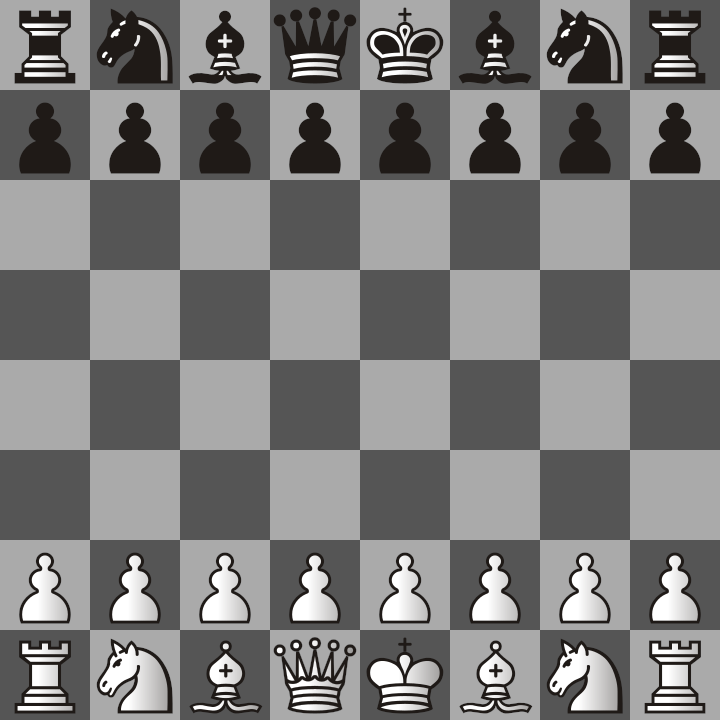
    C: I wish that I had known then what I know now so that I had a second chance to do something I would have done differently had I had access to more information. Regret is when you lose a chess game because you did not see all the pieces and didn’t make the best move possible.

    H: That’s correct. So tell me, what do you think it looks like for God to regret?

    C: There must be something that God does not know.

    H: And specifically in this context of Genesis 6, what does God regret?

    C: God regrets that he created human beings.

    H: And when you regret something, what do you do about it?

    C: You try to correct your mistake and learn to do better next time with the information I have from the experience.

    H: Correct, and that is what God did.

    C: God learned from his mistakes?

    H: If you can learn from your mistakes playing Chess, Shogi, or computer programming, what makes you think God is any different?

    C: I get what you are saying; logically, it makes perfect sense. God learns from his mistakes just as we do. But doesn’t that go against what Christians are teaching about God being omniscient and knowing everything that can be known? If you know everything already, how can you learn?

    H: Pay close attention to what you just said: “Everything that can be known”. God can know everything that can be known, but not everything can be known.

    C: I don’t understand.

    H: Chastity, tell me, can anyone know every possible position that exists in Chess or Shogi?

    C: No, because the possibilities of what can happen in any given game are limitless and beyond what man or machine can calculate.

    H: Well, with that being the case, what if I told you that God is a mastermind who can calculate many things but not everything? To know how the game will go, you need to understand not only the rules of the game but also the mind of your opponent. Are you with me so far?

    C: I think so; after all, this is why I like Chess because by playing, you can come to a greater understanding of who you are playing with.

    H: Yes, that’s right, but have you ever played with yourself?

    C: I can’t do that since the surgery.

    H: Chastity, you know very well that is not what I meant. I mean, have you ever tried to play Chess with yourself? Tell me what happens.

    C: I play both white and black and try to find the best possible move in every situation.

    H: But do you have a list of what moves will be made ahead of time?

    C: No, because until I decide on my move, I can’t know what my response will be.

    H: So, can you see what it must be like if God plays Chess with himself?

    C: If God plays Chess with himself, then there is an equal and opposite reaction for every action.

    H: Are you aware that you just quoted Newton’s Third Law of Motion?

    C: Fig Newton’s what now?

    H: Always joking, I see. But you know what I mean. Did you at any point know that you would be quoting Newton’s Law in response to my question about God playing Chess with himself?

    C: No, I had no idea I would even be having this conversation with a unicorn about the story of Noah’s Ark or God playing Chess with himself.

    H: Well then, Chastity, if you don’t know the outcome of any chess game, even with yourself, then what makes you think God knows the outcome of all events? Therefore, God is capable of not knowing some things. God is capable of regret and, with it, sorrow.

    C: I understand what you are saying, Honesty. God is capable of regret and sorrow, but what does any of this have to do with the Rainbow?

    H: Do you remember what I told you about how Rainbows are created?

    C: It’s been a while, but I remember that a rainbow is created when the light of truth touches the tears of the pure in heart. When I see a rainbow, it means that a unicorn is not far away.

    H: That’s correct. And what happens every single time you arrive at this place that you named Animal Sanctuary?

    C: Every time I cry over the things I regret. When I cry, I remember the things I regret and wish I had only known so many things I didn’t know years ago that I know now.

    H: You see, it’s like that with God, too. The difference is that when God cries over the evils of humanity, it’s a lot of tears. Chastity, if you had enough teardrops to count all the animals who selfish humans murdered, how many tears would that be?

    C: More than anyone can count. Like the stars in the sky.

    H: And if you had a tear for every unborn baby that was aborted for the love of money, the greed of humanity.

    C: More tears than there are grains of sand on the earth.

    H: And if you had a tear for every LGBTQIA person who was murdered, disowned by their family for something they didn’t choose, or imprisoned for a crime when they have not even done anything wrong and were born with a difference that they didn’t choose.

    C: More than the stars or the sand combined. More than the possible games of Chess or Shogi. More than the never-ending falling Tetris blocks.

    H: And what name would you give for that many tears?

    C: A flood.

    H: Yes, Chastity. That’s why, in order to understand the Promise of the Rainbow, you have to know that before the Rainbow appears, first come the tears. Then, when the tears of the pure in heart touch the light of truth, the true colors appear that were really there the whole time. That is why whenever you are sad, you must Remember the Rainbow and what it means to you and what it means to God.

    C: Honesty, are you saying what I think you’re saying?

    H: Yes, it was God’s promise never again to destroy life he did before. Contrary to what some have claimed, nobody stole the Rainbow from God. He gave it to everyone. When you cry your tears, remember that God is right there feeling the same thing you are feeling. When you see the colors of the Rainbow, remember that just as the Rainbow is every color contained in the Light of Truth, so too are all living beings different wavelengths of the light of truth that is God. And all living beings are a piece of the puzzle that is called God by some but by others, such as you, a name that you understand better because of the hypocrites who have ruined God’s reputation, just as others have damaged your reputation when they use words such as Christian, Pro-Life, or Transgender but then do things that show they did not mean the words they said.

    C: Are you saying that the reason I didn’t understand God was because those who claimed to represent God were liars and hypocrites?

    H: Now you’ve got it, Chastity. Now you know the truth, and the truth has set you free.

    ______

    Genesis 9:8-16

  • Chapter 4: The French and Caro- Kann Defense

    Don’t let the fancy names confuse you. These openings for black are both good responses to play when white does E4 (king’s pawn two spaces) as their first move. I am teaching these two openings together in one post because I want to talk about their strengths and weaknesses. Depending on what your goals are, you may prefer one or the other.

    I will show you pictures of each and then talk about their pros and cons. Note that both of these have a similar goal of moving the queen’s pawn two squares but defending it with a pawn.

    French Defense

    Caro Kann Defense

    You may look at these pictures and wonder what the point of all this is. The point is that you want to move your queen’s pawn but then the white pawn will take it. You can of course always try the Scandinavian Defense if you like to live dangerously, but the idea here is to not risk bringing out your queen before it is ready.

    We don’t know what move white will do next before we have a chance to move our queen’s pawn. For the purposes of this lesson, let’s assume.

    Therefore, if you move your queen’s pawn two squares and white captures it, no matter which of those pawns you decided to move, they can now capture the white pawn. The results will look something like this depending on which you chose.

    French Defense: Exchange Variation

    Caro-Kann Defense: Exchange Variation

    As you can see, the main difference between the results is which pawn is missing on your side and which direction your queen can move diagonally. Therefore, plan accordingly to what you plan to do with your queen.

    But if you are a new player, you may be thinking “But I don’t know what my plans are yet! Which do you personally recommend, Chastity?”. If this is you, then I offer my advice! Go with the French defense! Notice that in the French Defense Exchange Variation above, both bishops are able to move out. This gives you options so you can decide later how you want to attack white. I seem to win more of my games with the French Defense instead of Caro-Kann Defense for this very reason.

    But in either case, watch out because it is white’s turn. You can almost guarantee that white will attempt to put you in check in some way. But you have knights and bishops to defend either way!

    Also, white could totally move a pawn to C4 and bring you into the Queen’s Gambit.

    I also did a short video on these openings as part of my June 2 2024 stream.

  • Chapter 3: The Scandinavian Defense

    The first two chapters covered the Queen’s Gambit and the London System. While these have mirrored black versions, they are primarily considered openings for white because white makes the first move and can control how the game starts.

    But what I am about to teach you in this chapter is a method for black to try and gain control of the situation. The Scandinavian Defense looks like this after white plays E4 and black does D5.

    This picture is taken from black’s perspective because if you are playing as black in the real world, the pieces will look like this from your perspective. The idea behind this is offering white a chance to take a pawn. This is similar to the Queen’s Gambit, but it is different because after white takes it, we can capture the white pawn with our queen!

    At this point I know what you’re thinking. You’ve probably been told it is a bad idea to bring your queen out early. Generally, this is true, but if you’re smart about it, you can keep your queen safe and hopefully still get your other pieces active. What will happen 95% of the time is that white will attack your queen with a C3 knight right away. When this happens, you want to move the queen to A5.

    Now at this point, white could literally do almost anything but the queen is safe for this turn. White will most likely move their other knight into the game and form some kind of plan. What you must do as black is the move pawn to C6.

    There are 3 main reasons why C6 is the best move. First, it provides your queen an escape route if she does get attacked later on. Second, it prevents white from putting the king in check with a bishop to B5, and third, it doesn’t block your dark squared bishop from getting out later on.

    If you find yourself in this situation of the image above, at this point you need to watch white’s moves and see what they are planning. You made it through the opening and now it’s time to play some chess. As stated before, the goal of an opening is just to open the game and then you still have to put your soul into ever move if you expect to win. However, I think this gives a really good start!

    I also made a video on this opening which is a good place to see an example game of how this will play out in a real live chess game.

    If there is anything I need to add to this post or you want to challenge me to a game of chess, comment on this post. I am looking for challengers who can play games with me when I stream live for an interactive experience. Even better is if you are a Twitch streamer so we can collaborate and grow our channels together.

    https://www.twitch.tv/chastitywhiterose

    https://lichess.org/@/chastitywhiterose

  • Chapter 2: The London System

    I hope you enjoyed reading about the Queen’s Gambit opening in chapter 1. Before I begin talking about the next opening, I want to mention that most openings are specifically for either the white or black player. In the official rules and tradition of chess, white starts the game. For this reason, whoever is playing the white pieces has a slight advantage.

    However, the advantage of white doesn’t mean that white wins much more often. However, because the white player can make the first move, they choose which openings black can play. If white does D4, then black would not want to move their king’s pawn two squares forward to E5. White’s pawn would just capture it and black could not really capture back without great effort. For this reason, I tend to prefer D4 openings when playing with white. The Queen’s Gambit, the London System, and the Trompowsky Attack all start with D4 and so you will see me recommend this as the best move for opening the game as white.

    With that out of the way, let me introduce you to the London System with one quick image!

    Take a look at this image. It is only white’s side of the board. That’s because the London is sort of general purpose and doesn’t depend on a specific move the opponent does. In most cases, you won’t get a chance to complete this entire setup if your enemy attacks you quickly, however, I want you to look at this image and see that almost every piece has another piece defending it. This setup also allows the king to choose which side to castle on depending on your style and what your opponent does.

    The best part is that this doesn’t require you to move the pieces in a particular order except that you will need to move your queen’s pawn and dark squared bishop out before building the pawn triangle. The speaking of the pawn triangle or pyramid, this defensive strategy works because of the diagonal capture nature of the pawns. You will want to use a structure like this for your pawns in combination with many openings.

    Now here is where what I will tell you is going to be different than a lot of other chess players, the London can also work from the black side like the image below.

    The chance that you will have a setup like this is rarer when playing black but it’s not impossible. In fact, you will notice that the Scandinavian Defense, the French Defense, and the Caro Kann Defense all can transition into this because the pyramid of pawns can generally work starting with them. You might be missing a few pawns if they are captured, but this is still a really good setup and something to work for even when playing as black.

    But there is one final piece of advice I would like to end this chapter with, the opening is only part of the game. Things usually go well for me in the opening but then I blunder somewhere further down the line. Learning an opening system like this doesn’t make you a chess master, but because this is easy to learn and memorize, I hope this post will be helpful to someone out there who is confused because there are so many openings.

    In my live chess streams, you will frequently see me use the London because it’s the opening with my highest win rate. Check out this video for a quick overview before I played some actual games with the computer and then a real person.

  • I played chess with my mom for my birthday.

    This year, when my mom had asked me what I wanted for my birthday, I told her I wanted her to play chess with me. This was so that I had an opportunity to teach her what I know because I want to be a chess teacher. The second reason was that I wanted to give her a good memory of chess.

    You see, my father was not a good man, but he was the first person to teach her chess. It was 50 years ago, and it was his idea of a first date. However, this meant my mom had a permanent bad memory attached to chess because it reminded her of him. Therefore, I wanted to reteach her in a way that she would enjoy and think of it as a game she plays with me instead.

    Sometimes, it’s not whether you win or lose. Sometimes, it’s not even how you play the game. Sometimes, it is who you play the game with that counts.

    In all seriousness though, playing chess does sound like a good idea for a first date. That is the one thing in which I am the same as my father. It also probably explains why I turned 37 today and I’m still single!

    But I have my mom! Thank you for playing chess with me, mom! And thank you to everyone for the happy birthday messages!